
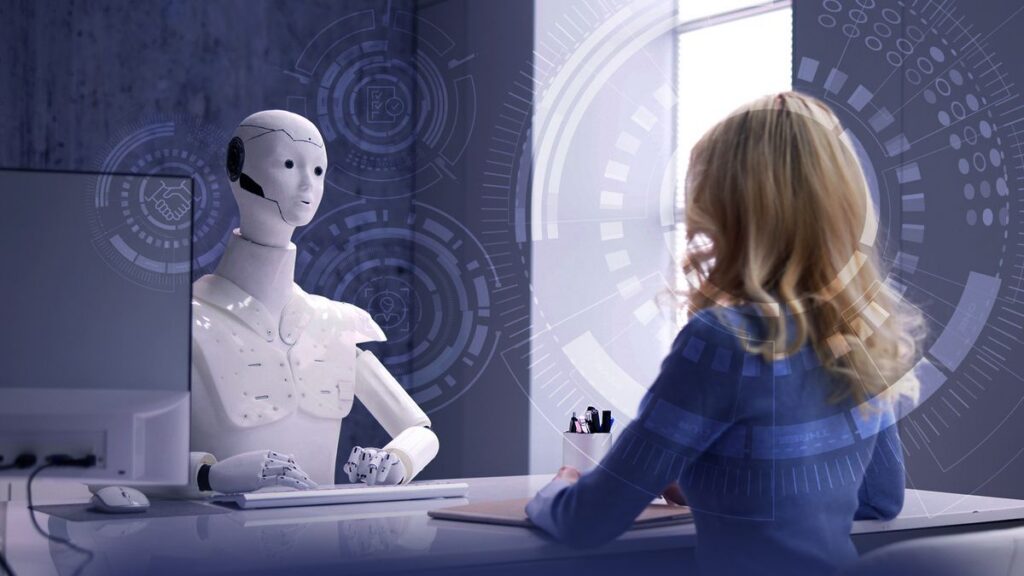
It’s undeniable that AI has been one of the most disruptive technologies in the past 1-2 years. Major corporations to startups have all embraced and applied artificial intelligence in various functions, including areas we once thought only humans could handle, such as HR and talent acquisition. AI is playing an increasingly important role in job interviews.
So, if you’re looking for a job or just entering the workforce, should you follow AI’s lead, or should you start interviewing with robots? Can artificial intelligence truly help reduce bias and improve the recruitment and education processes? Let’s dive into it.
What is Talent Acquisition?
Talent acquisition, or finding the right people for the right positions and retaining them for an extended period, is a crucial aspect of the HR industry. AI plays a significant role in sourcing and selecting employees for organizations.
The Role of AI in Talent Acquisition
It’s important to note that most organizations do not yet use AI for one-on-one interviews, but they may use it to support initial stages of recruitment or for positions that require a substantial workforce. In companies that are expanding or scaling up from small to large, AI-powered tools are highly beneficial for handling the minutiae of talent acquisition.
- AI for Initial Applicant Screening: From creating job advertisements and posting job listings to screening hundreds or thousands of applications, AI can help identify potential candidates, lightening the load for HR teams.
- Matching Candidates to Job Descriptions: Smart AI systems, such as Large Language Models (LLMs), can understand the language within job descriptions and compare it to applicants’ resumes. This ensures that the best-fitting candidates are selected.
- Managing Routine Job Positions: Some job roles may not require extensive qualifications, and AI can assist in the initial screening and simple interviews, helping streamline the HR process.

Examples of AI Used in Talent Sourcing
The well-known fast-food company Wendy’s in New Zealand uses a chatbot named Lou to pre-screen applicants. Lou simplifies the job application process by allowing applicants to scan a QR code. The chatbot then schedules the first round of interviews entirely through AI-driven conversations, analyzing the applicants’ responses to select the best candidates for a final in-person interview. This approach speeds up the selection process and minimizes human effort.
Challenges of Using AI in Candidate Selection
- Bias: The issue of bias and fairness is a significant concern in HR, as AI systems may unintentionally inherit biases present in the data they are trained on. For example, if an AI system primarily relies on data from well-known universities, it may inadvertently disadvantage applicants from lesser-known institutions.
- Data Privacy: Storing and handling sensitive applicant data is crucial. Cybersecurity measures must be robust to protect applicant information stored in company databases, which could potentially be used by AI without the applicants’ consent.
- Human Interaction: While AI may be cutting-edge, it cannot replace the personal touch and connection that human-to-human interviews provide. Human interaction remains essential in the final stages of the interview process to assess a candidate thoroughly before hiring.
In summary, we are in an exciting era where AI is poised to play a crucial role in various aspects of our professional lives, including job hunting and interviews. Balancing AI and human judgment can make the candidate selection process efficient and optimized. However, if AI usage is not fair or standardized, individuals impacted by these systems must stay vigilant and drive continuous improvement in the field of AI.