
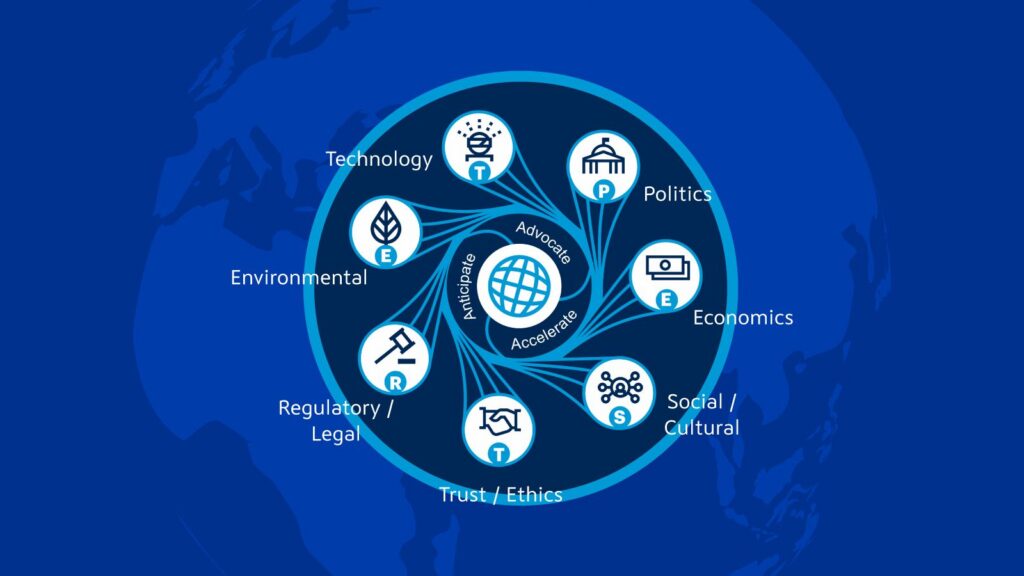
In a world rapidly changing with technological advancements amidst the era of the VUCA World (Volatility, Uncertainty, Complexity, Ambiguity), organizations must be prepared and continuously adaptable to appropriately address an unpredictable future. For this reason, G-Able, as a Tech Enabler committed to fostering the growth of our clients’ businesses, has utilized data from the Gartner Futures Lab, a division of the globally renowned technology research and consulting firm, Gartner. This data has been analyzed to understand and identify seven factors predicted to have a significant impact on global organizations in the future.
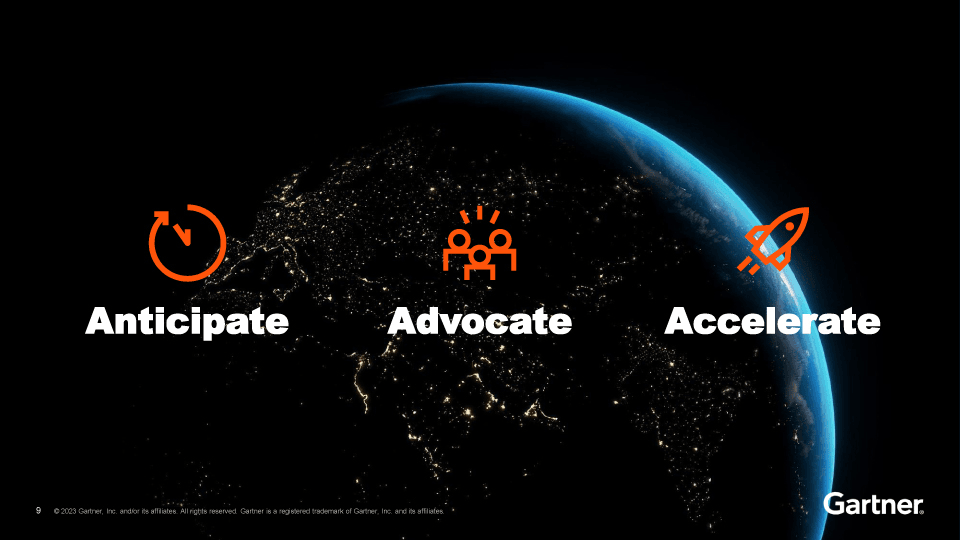
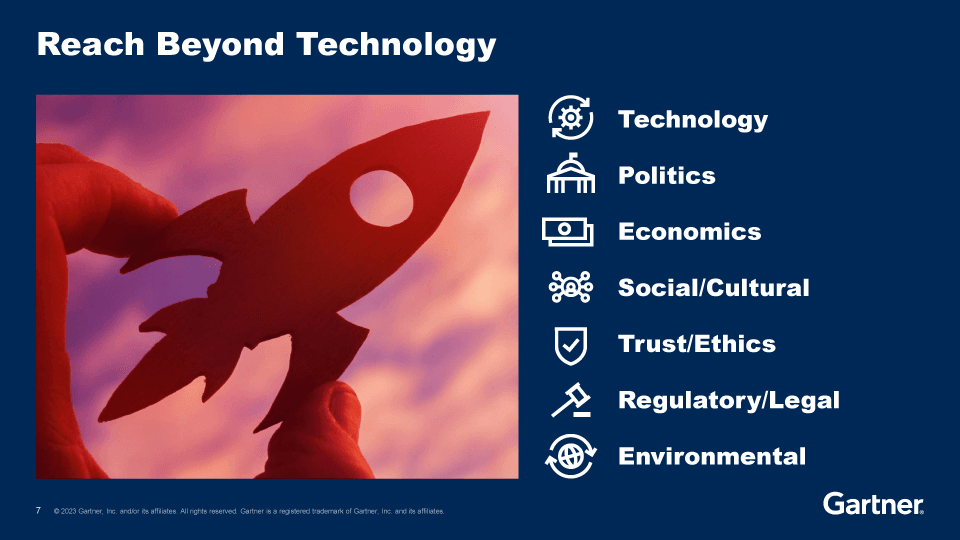
To ensure organizations can effectively utilize this guidance, the Gartner Futures Lab has broken down each factor into three perspectives: Anticipate, Advocate, and Accelerate, covering the implications across seven areas: Technology, Politics, Economics, Social/Cultural, Trust/Ethics, Regulatory/Legal, and Environmental. Let’s delve into the details of these areas.
The 7 Forces That Will Impact Your Organization’s Future
1. Democratizing Generative AI GenAI will democratize information and skills across a broad set of roles and business functions, making it one of the most disruptive forces of this decade.
Anticipate
By 2026, more than 80% of enterprises will have used generative AI APIs and models and/or deployed GenAI-enabled applications in production environments, up from less than 5% in 2023.
Advocate
- Content Generation
- Improved Efficiency
- Hyperpersonalization
- Re-Evaluate Business Risks
- Competition
- New Skills Needed
Accelerate
- Create priority matrix of use cases.
- Employ new approach to change management that focuses on training and well-being.
- Solve for explainability and content moderation.
- Build a portfolio of quick wins.
2. Digital Paranoia The pace of digital transformation fuels digital paranoia, since the technologies advance and proliferate before their implications, for better or worse, may be fully understood.
Anticipate
By 2030, 50% of employees will receive personal cybersecurity management/insurance benefits from their employers, particularly for remote/hybrid employees.
Advocate
- Responsible AI
- Operational Efficiency
- Prepare for Disruptions
- Incompatibility and Conflict
- Digital Fragmentation
- Customer Base Alienation
Accelerate
- Prioritize building competitive digital advantages and partnerships.
- Establish protocols, guidance and training.
- Establish permanent and flexible digital innovation and enablement teams.
- Dedicate teams to monitor national and international digital governance efforts.
3. Economic Transparency Refers to the desire for democratization of analysis of and insight from market, financial and governmental information to drive investment and policy decisions by non subject matter experts.
Anticipate
By 2030, generative AI can help increase the traceability of economic activity by shrinking the number of people who don’t have any access to banking by 50%.
Advocate
- Digital Economy Expansion
- Resource Stewardship
- Investment Opportunities
- Challenging
- Privacy Concerns
- Cybersecurity Threats
Accelerate
- Identify opportunities to grant consumers and stakeholders access to easily consumable economic and financial data.
- Seek to consume transparent economic and financial data to enhance products and services.
- Use emerging generative AI techniques to cut through data obfuscation and derive greater insight from what is currently available.
4. Synthesized Culture The occurrence of generative AI creating cultural artifacts that results in a human machine culture, or a dehumanized machine culture.
Anticipate
By 2026, over 100 million humans will engage robo-colleagues (synthetic virtual colleagues — digital humans) in enterprise work.
Advocate
- Reinvent Customer Experience
- Augment Content Creation
- Personalized Training
- Deep Fakes
- Job Risk
- Risk to the Arts
Accelerate
- Identify jobs in your organization that are likely to be impacted by generative AI and incorporate this into future workforce planning.
- Determine how these roles may benefit by augmenting content creation with AI.
- Address data privacy concerns over how data submitted to LLMs is used internally and customer facing.
5. Decline of Digital Trust People are becoming increasingly wary of the potential impacts of digital technologies and specifically those companies that are deploying them.
Anticipate
Through 2025, organizations that can instill digital trust will be able to participate in 50% more ecosystems to expand revenue generation opportunities.
Advocate
- “Certified Human”
- Ecosystem
- Privacy Sells
- Competition
- Violating Trust
- Safeguarding
Accelerate
- Launch a “Certified Human” initiative.
- Develop and publish a digital trust policy for your organization.
- Ensure your digital trust policy delivers on its promises.
6. Divergence in Global AI Rulemaking Divergence in global AI rulemaking refers to the increased and disparate legislative, regulatory and standard setting efforts to direct development and define acceptable use of AI systems.
Anticipate
By 2027, a regulatory agency in the EU will issue a fine in excess of €1 billion as a result of noncompliance with provisions in the EU AI Act.
Advocate
- Demand
- Leadership
- Shape
- Legal Uncertainties
- Direct Costs
- Public Rejection
Accelerate
- Require transparency from IT vendors on AI use.
- Work with legal counsel to draft contractual provisions that protect for data privacy and confidentiality.
- Develop governance and auditing processes to ensure decision-making systems are hardened against malicious actors.
- Reach an agreement with stakeholders about ethics guidelines for “high-risk” AI uses, based on emerging regulatory standards.
7. Reality of Net Zero Enterprises and cities working to achieve net zero are faced with several challenges, including digital immaturity, poor data accessibility and quality, limited financial support and competing priorities.
Anticipate
By 2026, 80% of global enterprises with net zero goals will restate interim milestones under stakeholder scrutiny of progress and underinvestment.
Advocate
- Goals
- Outcomes
- Missed Innovation
- Transparency
- Credibility
- Misalignment
Accelerate
- Reevaluate your strategies, but do not stop the effort.
- Reorient your environmental sustainability plan toward what is feasible.
- Balance the accountability of net zero carefully with the opportunity to get better net zero execution results.

Summary
In an era where the future is rapidly changing, understanding and adapting to these driving forces can help organizations prepare and bravely face the challenges of the future. However, for those organizations that are still finding their way, Gartner has provided a framework of thought to consider before taking action:
- Expand the scope of interest, not limited solely to technology.
- Begin immediate actions, focusing on the future while considering possibilities.
- Generate momentum for the future, aiming to create positive impacts on the world.
- Propel rapid innovations and transformations.